The Green Bay Packers' 2025 NFL Draft presented a complex picture: a blend of immediate needs addressed and a clear focus on reshaping the roster for the future. Was this a successful rebuild, or merely a strategic patching of holes? This review delves into the specifics, analyzing each selection and assessing the overall effectiveness of the Packers' draft strategy. For more Green Bay events, check out this site.
A New-Look Receiving Corps: A Calculated Gamble?
Green Bay's investment in wide receivers Matthew Golden and Savion Williams (rounds 1 and 3 respectively) immediately signals an attempt to revamp their offensive attack. The need for receiver upgrades was undeniable, particularly given the injury history of existing players. This strategy directly addresses a key weakness. However, will these rookies provide immediate star power? Unlikely. Their contributions will likely be gradual, requiring time to adjust to the NFL's demands. The team is betting on their long-term potential—a high-risk, high-reward gamble predicated on the coaching staff's development program. Will it pay off? Time will tell. The success hinges on their ability to quickly learn, avoid injuries, and integrate seamlessly into the offensive scheme. Is this a game-changer? The jury is still out.
Did the Packers adequately address their immediate needs at wide receiver? The addition of Golden and Williams certainly provides a boost in talent, but the question remains whether this was sufficient to significantly improve the offense this year.
Defensive Line Depth: A Long-Term Vision?
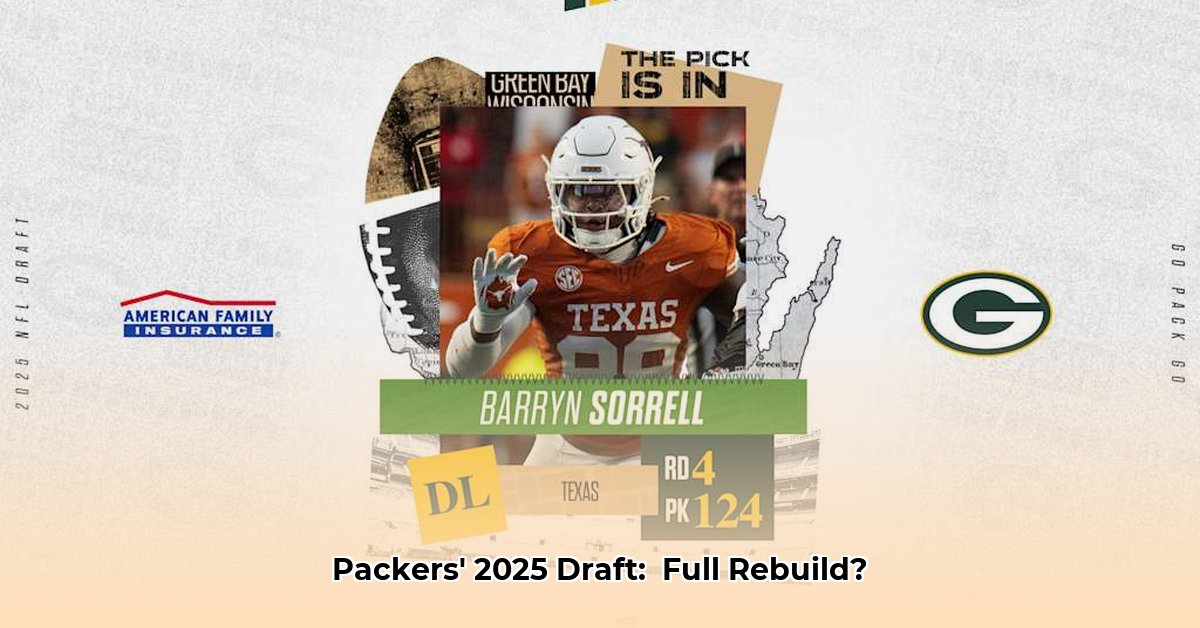
The selections of defensive ends Devonte Sorrell and Isaiah Oliver present an intriguing conundrum. Neither player is projected to be an immediate starter, indicating a focus on long-term development rather than immediate impact. This strategy, while potentially shrewd, risks leaving the team vulnerable in the short term. Was this a smart gamble on future talent, or a missed opportunity to address an immediate need? The answer is unclear at this point. Critics might highlight the lack of immediate improvement, while supporters may praise the long-term vision. The effectiveness of this strategy relies entirely on the development of these players. Continuous monitoring of their progress is crucial in judging the success of the selections. This directly impacts the team's ability to put pressure on opposing quarterbacks.
Did the Packers prioritize immediate defensive needs over long-term development? The focus on developmental players suggests a longer horizon.
Addressing Other Needs: A Balanced, Yet Risky Approach?
Beyond receivers and defensive ends, Green Bay added depth at offensive line (Belton, Williams) and cornerback (Robinson, Brinson). These additions aimed to strengthen the roster across multiple positions while showing some added protection in case of player contract issues such as with Jaire Alexander. This demonstrates a broader strategic approach, yet the question remains. Was this approach too diffuse? Some might argue that a concentrated effort on fewer crucial positions would yield greater short-term success. Others might applaud the diversification, creating a more resilient team. Ultimately, the effectiveness hinges on the individual players' performance and the team's overall cohesiveness.
Did the Packers successfully balance needs across multiple positions, or did they spread their resources too thinly? The approach seems to offer depth across several positions rather than focusing on a select few.
Evaluating the 2025 Draft: A Holistic Assessment
The 2025 draft presents a mixed bag, difficult to definitively grade at this stage. The Packers addressed some needs; however, a lack of an overarching, clearly defined strategy is notable. This resembles baking a cake: correct ratios are crucial. Did Green Bay successfully blend these players to create a cohesive whole, or did they simply fill gaps? The season's outcome will provide the ultimate answer. Each player's integration into the existing team dynamics is paramount, and there are some inherent uncertainties with regard to injuries and long-term development.
Was the 2025 draft a success? It’s too early for a definitive conclusion. We must observe actual performance.
Long-Term Outlook: A High-Stakes Gamble
The long-term success depends heavily on the rookies’ development and integration. The coaching staff's ability to nurture talent, and even a degree of luck, are all influential factors. The next three to five seasons will be crucial in determining whether this draft was a masterstroke or a missed opportunity. The investment is significant, and patience is necessary to properly assess its return.
Actionable Insights: Key Players and Future Uncertainties
| Player(s) | Position(s) | Projected Immediate Impact | Long-Term Potential | Potential Risks |
|---|---|---|---|---|
| Golden, Williams | Wide Receiver | Moderate | High | Injury risk, adapting to NFL speed and schemes |
| Sorrell, Oliver | Defensive End | Low | Moderate | Development time, consistency issues |
| Belton, Williams, Brinson | Offensive Line | Low | Medium-High | Injury proneness, development curve, positional fit |
| Robinson | Cornerback | Moderate | High | Dependence on Jaire Alexander's status |
This table summarizes the key rookies, highlighting their projected impacts and potential risks. The variability in their projected contributions showcases the inherent uncertainty in rookie evaluation. The Packers' ability to mitigate these risks and to appropriately develop each player is paramount.
In conclusion, the Green Bay Packers' 2025 draft was a multifaceted endeavor aiming to balance immediate needs and long-term development. A definitive assessment of its success requires observing the team's on-field performance over several seasons. The coming years will be crucial for determining whether this strategy truly transformed the team’s future.